Have you ever wondered how a captain turns a match without even bowling a ball? Cricket field placement is the secret chess game on the grass that decides who triumphs or loses. Indeed, moving a fielder just three steps can turn a huge six into a match-victory catch! This simple cricket field placement layout is how captains outsmart the world’s best batters. Therefore, knowing where players stand helps everyone, from young kids to grandparents, enjoy the match like a true expert. Welcome to Khelofun, your favorite home for clear, exciting cricket news. Let us look at how these smart setups work so you can impress your friends during the next big live match.
What Are the Core Zones on a Cricket Field?
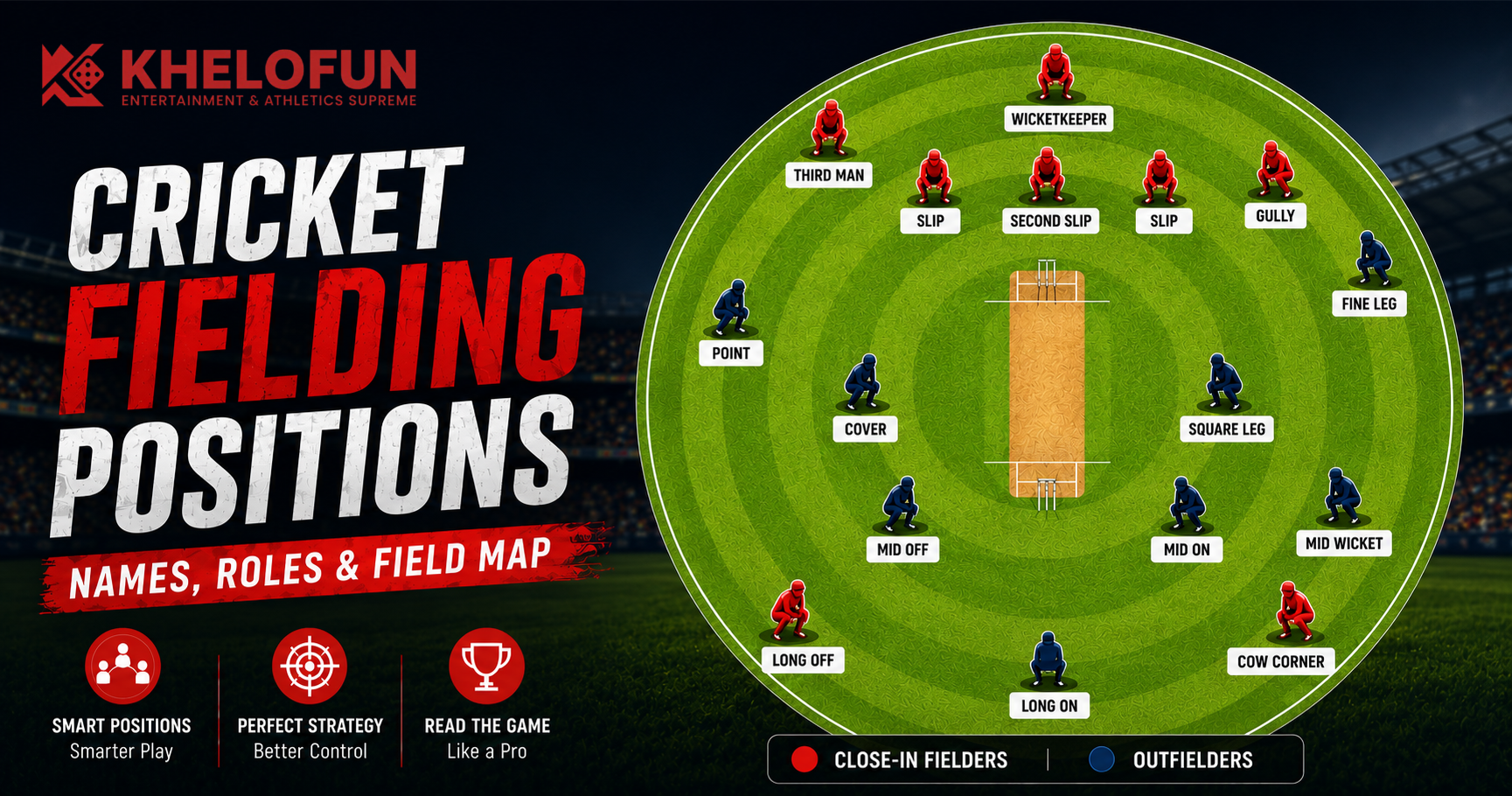
First, a cricket field has two clear parts. Clearly, the line down the middle splits them in favor of a right-handed batter. For example, the offside is the area in front of the batter’s face. Meanwhile, the Leg Side is the area behind the batter’s back, near their legs.
In addition, captains use three main zones on the grass:
- The Close-In Zone: Primarily, this small area sits very close to the batter. Naturally, fielders stand here to catch quick, sharp balls, so they always wear helmets to stay safe.
- The Infield: Next, this is the area inside the 30-yard circle. Fielders here run fast to stop quick runs and keep the pressure high.
- The Outfield: Finally, this large space runs from the circle all the way to the boundary rope. As a result, outfielders catch high balls and stop big hits.
Ultimately, these simple places show how a great c
ricket field placement works to stop the batting team from scoring.
Can You Learn the Cricket Fielding Positions Names?
Fortunately, it is very easy to learn the cricket fielding positions’ names. In fact, the words tell you exactly where to look. For instance, “Silly” means a spot very close to the bat, while “Short” means close. Similarly, “Backward” means at the back of the batter’s line, while “Forward” means in the front of it. Lastly, the “Deep” or “Long” method creates a gap proper next to the outer boundary rope.
Below, here is a quick look at the main roles:
| Position | Field Region | Primary Tactical Role |
| Wicketkeeper | Behind the stumps | Catches
edges and stops wide balls. |
| Slip Cordon | Behind the batter, Off Side | Stands next to the keeper to catch fast edges. |
| Gully | Wide of slips, Off Side | Catches thick, flying slices. |
| Point | 90° Square side, Off Side | Stops quick square cuts on the inner 30-yard circle. |
| Cover | Front side, Off Side | Blocks straight drives to stop easy runs. |
| Mid-Off / Mid-On | Straight, Off & Leg | Blocks straigh
t hits down the ground. |
| Square Leg | 90° Square side, Leg Side | Catches leg g
lances and quick pull shots. |
| Mid-Wicket | Front side, Leg Side | Stops bright flicks and mid-wicket pulls. |
| Fine Leg | Behind square, Leg Side | Catches thin sweeps behind the wicket. |
| Third Man | Behind the square, Off Side | Guards the deep border to stop fastballs. |
| Long-On / Long-Off | Straight deep boundary | Catches long hits right at the boundary rope. |
How Do Advanced Placements Turn a Match?
Furthermore, when a captain needs a quick wicket, they use unique, advanced spots. Of course, these spots need brave fielders who can react fast.
The Close Catchers
Specifically, an attacking field strategy uses fielders at Silly Point or Short Leg. Indeed, these brave players stand just 3 to 5 yards from the batter. Mainly, they look for quick balls that pop up off the bat or pad against spin bowlers.
The Deep Boundary Targets
Conversely, when a batter starts to hit the ball very difficult, the captain shifts to a protective field method with these deep spots:
- Cow Corner: A deep spot on the boundary rope between deep mid-wicket and long-on. Consequently, a fielder stands here to catch big, wild aerial hits to the leg side.
- Sweeper Cover: Alternatively, a deep boundary rider on the offside who covers a very wide area. Thus, they run fast to stop boundaries from heavy cut shots.
Why Does a Captain Change the Field?
Obviously, a captain changes the cricket field placement to match the flow of the match. Therefore, they pick between two main plans:
The Plan for an Attacking Field Strategy
- More Catchers: First, the captain puts three or four slips near the keeper to catch edges.
- Circle Pressure: Second, infielders move closer to the bat to stop easy single runs.
- Bowler Support: Third, the field matches the bowler’s plan to force a quick mistake.
The Plan for a Defensive Field Strategy
- Guard the Rope: First, fielders spread out deep to stop four-run hits.
- Give Away Singles: To get the hitter off a strike, the captain allows them to take one simple run.
- Dry Up Runs: Third, the field blocks all easy gaps. As a result, the batter feels stuck and frustrated.
In conclusion, watching these quick shifts helps you see if a team wants wickets or just wants to save runs.
Why Is Field Placement the Ultimate Captaincy Test?
Obviously, setting the field is not just about placing players on the grass; it is a true test of a captain’s mind. Indeed, an international captain must watch the batter’s feet, know the bowler’s plan, and check the wind speed all at once. Consequently, making a quick change before a delivery can completely break a batter’s focus and force a huge mistake.
1. Reading the Pitch Conditions
First, a captain looks closely at the ground before choosing their cricket field placement. For example, if the clay is dry and dusty, the ball will turn a lot, so the captain will bring in close catchers. Conversely, on a fast, green pitch, they will push fielders back into the slip cordon to catch fast, flying edges.
2. Studying the Batter’s Habits
Second, every batter has a favorite area where they like to hit the ball. Therefore, a smart captain uses an attacking field strategy by blocking those exact spaces. By doing this, they force the batter to play risky shots in areas where they do not feel safe or comfortable.
3. Helping the Bowler’s Plan
Third, a bowler cannot excel without total trust in their field layout. In fact, if a fast bowler wants to bowl wide balls, the captain must place extra fielders on the Off Side. As a result, the bowler can charge in with high confidence, knowing their team has covered every gap.
4. Adapting to the Format
Lastly, the style of the match changes the setup completely. For instance, a T20 match calls for a heavy defensive field strategy with deep boundary riders to forestall short runs. Meanwhile, a five-day Test match demands patience, masses of near slips, and aggressive catchers near the bat to hunt for wickets.
Final Recap
Knowing the secrets of a cricket field placement makes watching the sport much more fun. Indeed, from the brave players at Silly Point to the fast runners at Sweeper Cover, every spot matters. Hence, when you know these cricket fielding position names, you can guess the next ball before the bowler even runs in. So, read more clearly, top-tier guides here at Khelofun, your best home for fresh cricket news and expert views.
Now, try to spot these field shifts during the next big live match! Also, share this easy guide with your friends, leave a comment below about your favorite field plan, and talk with our fan community as we track the latest match news together.