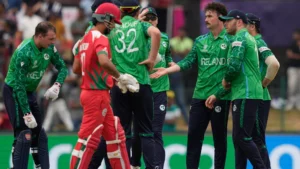
Pakistan and Ireland assembled at the Sinhalese Sports Club in Colombo for a tune-up. For Pakistan, however, pressure comes with a conventional power position. Certainly, after an uncertain preparation period. However, it governed problems and potential tournament-participation controversies.
Ireland is under constrained expansion. combining experience with energetic newcomers. Before the real tournament starts on February 7 in India and Sri Lanka, both teams demand role definition. Warm-ups present little windows for examining plans. Early opportunities abound to hone match‑day schedules free of points.
Pitch Report: The Offering of Wickets
Usually favouring balance, the SSC surface in Colombo:
Crucial Characteristics
True bounce: batters can early trust the ace and bounce.
Later spin grip: Turn often appears later as the format goes on.
Shorter borders: Urge opposing hostile purpose.
Here, a par total in the 160–180 range appears competitive for T20s. particularly if it’s dry. Bowlers able to change speed and angles are probably to bring late-over successes for captains.
Weather Watch: The Rain Threat in Sri Lanka
Early February in Colombo, rain is a significant influence. Because of the rain, the warm-up was ended without a ball. Meaning both sides departed with lots of practice time but no match footage.
Better weather will determine Champions’ Cup openers and more organised meetings; however, teams have backups incorporated into their itineraries.
Likely Playing XIs: Modern Squad Signals
Recent team announcements and tournament team news provide the basis for these lineups. not only earlier editions.
Pakistan Probable XI
Salman Ali Agha (C)
Fakhar Zaman
Saim Ayub
Mohammad Salman Mirza (WK)
Mohammad Wasim Jnr
Naseem Shah
Shaheen Shah Afridi
Shadab Khan
Usman Tariq
Abrar Ahmed
Babar Azam
Tactical Side:
One of Pakistan’s main talking points is their batting depth. While Fakhar and Saim early bombard, Babar Azam anchors with control. The spin control core consists of Shadab and Abrar. Though Naseem and Shaheen have the new ball responsibilities. This combination implies a need for a balance of pace-spin customised to South Asian conditions.
Ireland Possible Starting XI
Paul Stirling (C)
Lorcan Tucker (VC & WK)
Harry Tector
Tim Tector
Curtis Campher
Matthew Humphreys
Calitz Ben
Mark Adair
Josh Little
Barry McCarthy
Craig Young
Acute Lens:
Ireland’s key discussion is its flexibility. Stirling, as a boundary threat, anchors several eras with separate functions; Tector does the same. Tector establishes the rhythm. The presence of younger batsmen such as Tim and Humphreys suggests a future-looking attitude. bowlers Little and McCarthy. Disciplined death overs and variations allow Ireland to exert pressure.
Core Strategic Match-Ups
Pay particular attention when you see the format in these duels:
Babar Azam vs Josh Little
Little’s left‑arm angle early in the innings disrupts Babar’s timing. Minimal width from Little compels Azam to rely on depth and positioning rather than only power.
Fakhar Zaman versus Barry McCarthy
Particularly off the back foot, McCarthy’s seam discipline will challenge Fakhar’s aggression. This sets the tone in the middle overs.
Abrar Ahmed versus Tim Tector
Tector’s propensity to carry back the ball calls spin variation. Abrar’s ability to fly the ball could produce false images.
Strategy Conclusions
Approach of Pakistan:
This side wants a definition of finishing jobs. What ties anchor? Who advances? Their present story concerns experience combined with new blood. Expect them to use this match to define clutch overs’ roles and death bowling rhythms.
Method of Ireland:
Rather than hitting phases, Ireland favours phases in construction. Pressure bowling and batting partnerships provide their power. They will search for Pakistan with disciplined overs rather than just brute speed.
Tactical Forecasting to Observe
From the angle of a strategic fan, should the format have gone forward? This is how this might play out:
Phase of Powerplay:
Should Pakistan’s top four follow control and risk management? However, they would probably score 8–9 runs per over. While saving wickets, Ireland would strive for 7–8.
Middle Overs:
Ireland’s aggressive batting can exploit spaces if spinners keep runs under check. Nonetheless, Pakistan will try to rotate considerably and score through the line.
Death Bowling:
Particularly from McCarthy and Adair, precision and length consistency could tip this phase for Ireland. However, Pakistan’s new pacers will strive for yorker accuracy.
Fan Narrative: What This Signifies
For supporters of Pakistan. Before the genuine tournament fights, this format is about calm and momentum. Particularly with the upcoming high‑profile disputes against India and the US next week.
Ireland fans can view this as a practice for Group B clashes. Likewise, here, consistent and tactical execution versus higher‑ranked opponents will shape their drive.